
1969 Jaguar E-Type Series 2 OTS
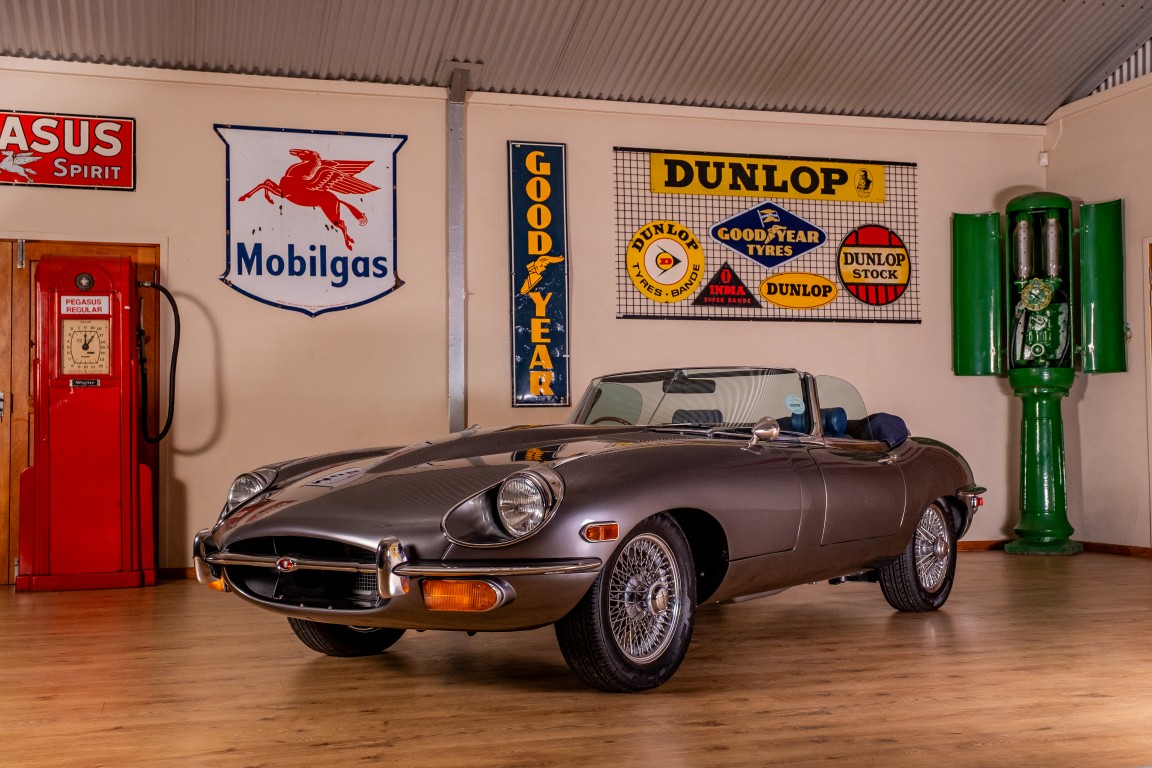
This Jaguar E-Type Series 2 OTS offers timeless elegance and has been restored to near perfection. It’s no surprise that Enzo Ferrari famously referred to the E-Type as “the most beautiful car ever made”…
Historical Context
Based on the iconic, triple Le Mans-winning D-Type of the mid-50s, Jaguar introduced its new rear-wheel-drive, front-engine E-Type sports car to the world in 1961 and it won immediate acclaim as the motoring icon of its time.
Today, the E-Type’s inimitable style and presence is widely recognised and respected by classic car enthusiasts and collectors the world over.

The E-Type ‘Series 1’ was initially offered as a Fixed Head Coupé (FHC), quickly followed by an Open Two Seater (OTS), with a 2+2 four seater “family” coupé coming to market in 1966.
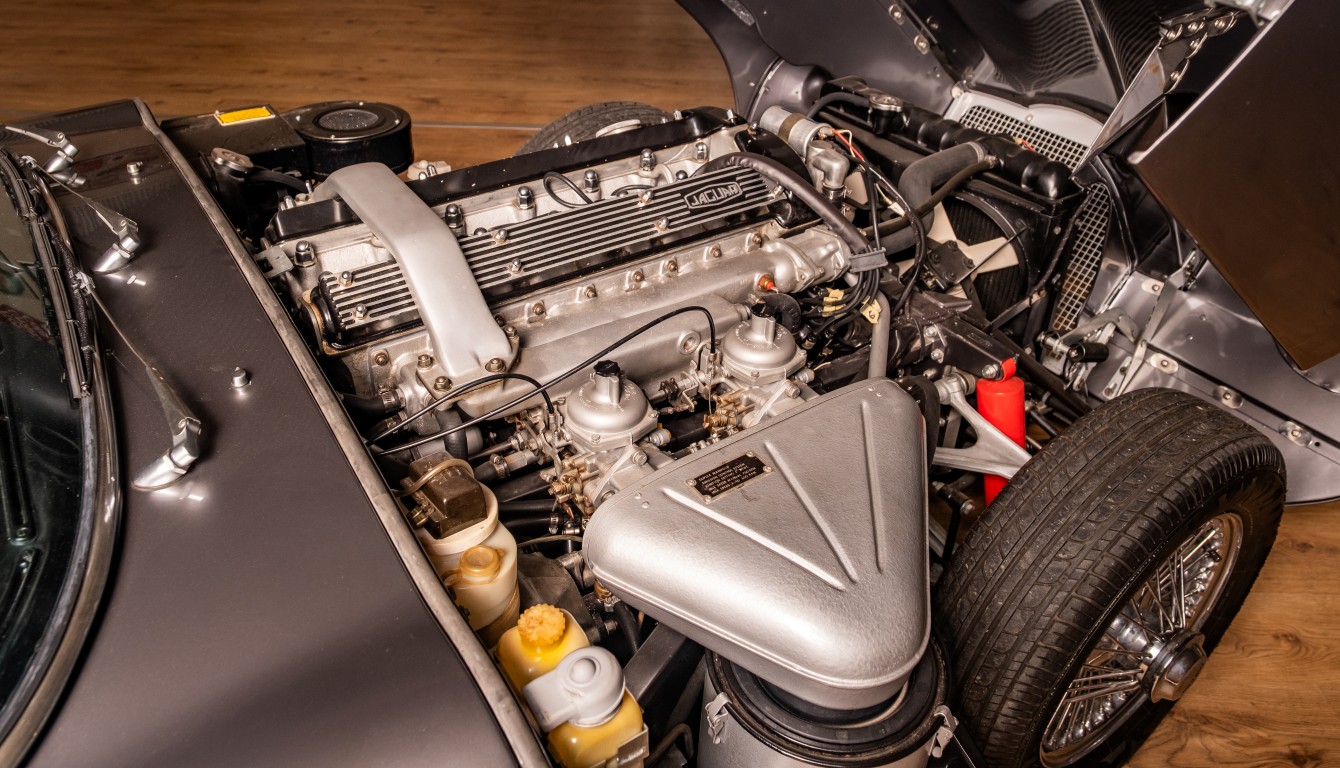
Under the long, rear-opening bonnet — a key feature of the E-Type — was the proven XK 3.8-litre 6-cylinder twin overhead camshaft engine with triple SU carburettors. In 1964, this engine was upgraded to 4.2-litre capacity that offered higher torque output.
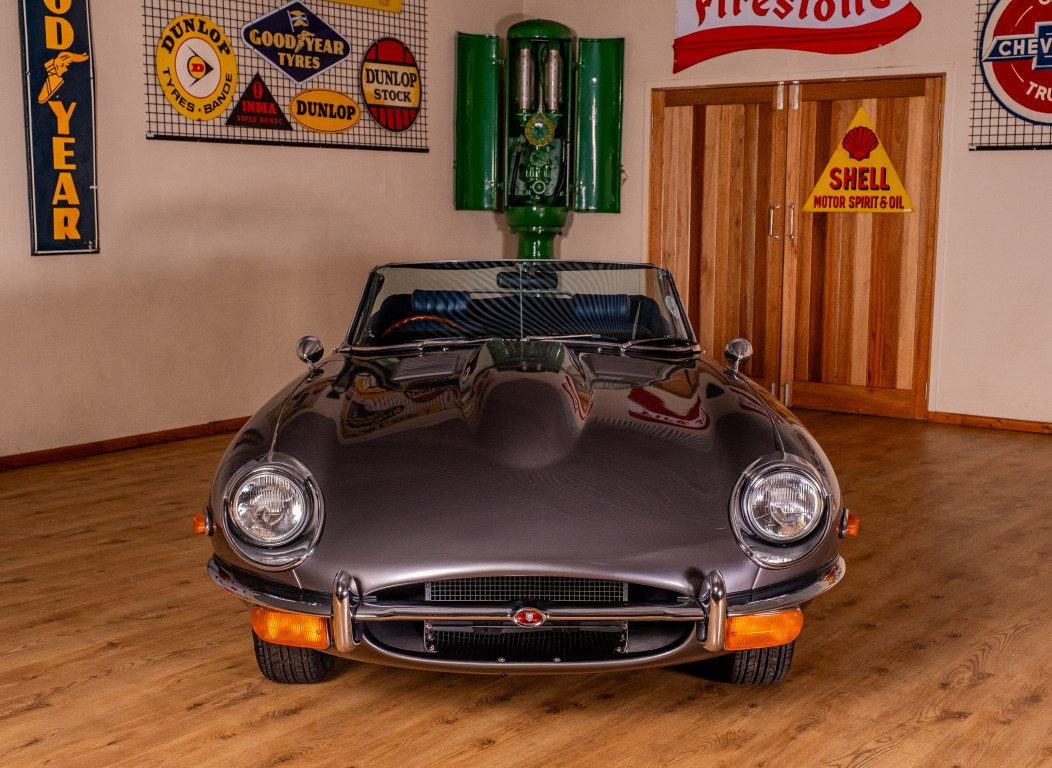
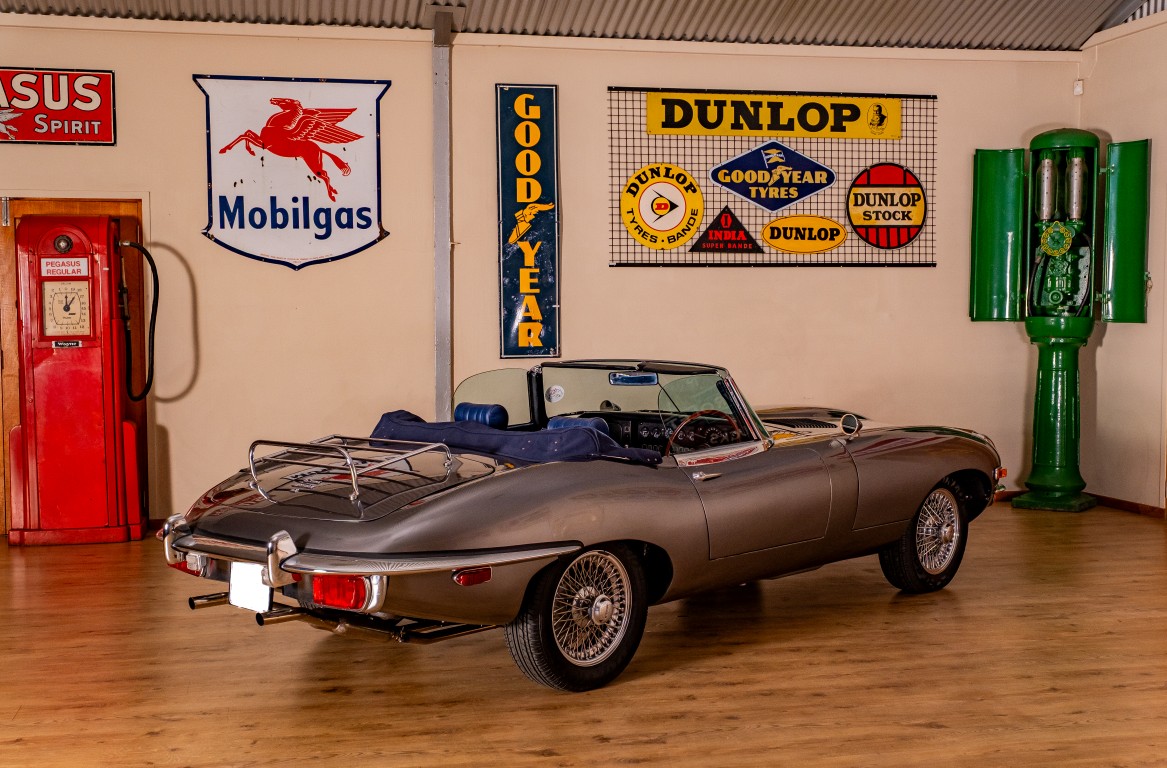
The arrival of the ‘Series 2’ E-Type in 1968 ushered in several US-imposed regulatory safety upgrades. Some easily identifiable exterior styling changes included the absence of the previous glass headlight covers, a larger grille intake, larger indicators, revised wrap-around rear bumper and repositioned taillights, to name a few.
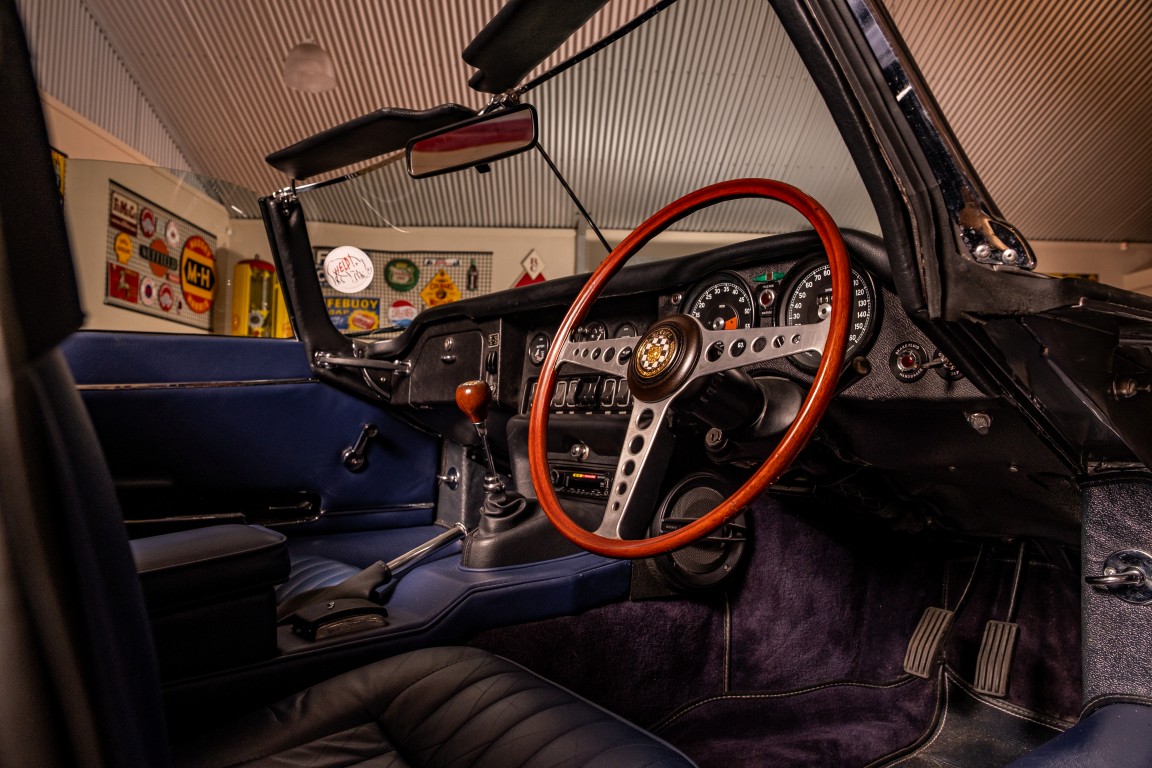
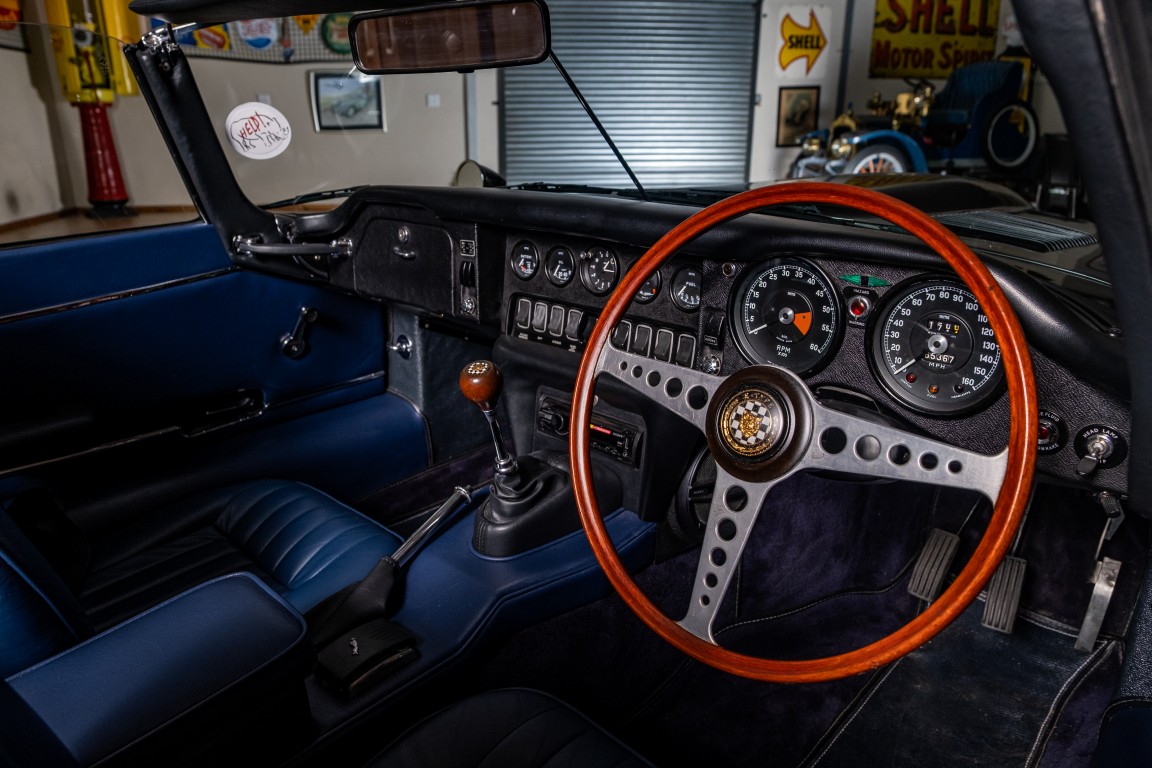
Interior changes saw the traditional dashboard-mounted ignition button replaced with an ignition key/start on the steering column. Safety measures dictated that toggle switches were replaced with rockers and a collapsible steering column and head restraints were introduced.
For the American market only, the Series 2 was fitted with twin double-barreled Stromberg carburetors coupled to an early emission control system. This came with a marginal reduction in power and torque.
In 1971, Jaguar introduced the third and final ‘Series 3’ E-Type with its new 5.3-litre V12 engine doing duty under the bonnet.
Production of the Jaguar E-Type ended in 1974 with about 72 000 vehicles produced in 13 years.

History of this example
1969 Jaguar E-Type Series 2 OTS in South Africa
This finely restored E-Type Series 2 OTS was exported to the United States as new and spent much of its life on the West Coast and even though it was well cared for, time and the environment took its toll.
The car was imported into South Africa in 2009 by a well-known collector in Port Elizabeth (now Gqeberha). In the process of its recommission, it was converted to Right Hand Drive (RHD), but retained its USA specification.

In 2014, the vehicle was acquired into the Parnell Bruce Collection and has benefitted from a full “body off” restoration over a 5-year period between 2017 and 2023. This process has ensured an “all-systems” rebuild including retention of all original components. For safety reasons, some critical elements such as the wiring harness are new.
Jaguars hold an important place in the Parnell Bruce Collection and this E-Type stands alongside a 1966 Series 1 FHC and going back in time, an original 1946 2.5-litre Saloon, two 3.0-litre Saloons that were meticulously restored by the Classique Edge team and a 1954 XK 120 SE FHC.
There are also two replica Jaguars, a 1953 XK 120 C (C-Type) and a 1956 D-Type race car which has competed in the annual Simola Hillclimb in Knysna.
In addition, the collection includes two later Jaguar sports cars — a 1990 XJS V12 Coupe and a 2002 XKR Convertible.
This collection embodies the Grace, Pace and Space of Jaguar’s philosophy.
If you’re interested in finding out more, please Contact Us.
Also see:
1968 Mercedes-Benz 280 SL Pagoda

Quick Facts: 1969 Jaguar E-Type Series 2 OTS
|
Status |
Available |
|
Origin |
Coventry, England |
|
Production |
1968 – 1971 |
|
|
|
|
Engine |
4,235 cc twin-overhead-camshaft, inline 6-cylinder, petrol |
|
Power |
195 kW @ 5 500 rpm |
|
Torque |
384 Nm @ 3 000 rpm |
|
Transmission |
4-speed manual |
|
Top Speed |
240 kph |
|
Dimensions |
|
|
Length |
4 453 mm |
|
Width |
1 657 mm |
|
Height |
1 219 mm |
|
Wheelbase |
2 438 mm |
|
Weight |
1 247 kg |